Moving with children and pets is not really a logistics problem. The boxes are the easy part. What takes the planning is everyone’s routines, and the fact that the people most affected by the move are the ones with the least say in it.
We move families across Chester, Cheshire, the Wirral and North Wales every week, and the moves that go well are almost always the ones where the family started early and kept the week looking normal. Here is how to do that.
1. Plan earlier than you think you need to
Families need more lead time than couples do, because there are more routines to protect and more people to carry along with the decision. Six to eight weeks is about right for a well planned move.
Work backwards from moving day
- 8 weeks: declutter as a family and book your removals survey
- 6 weeks: notify schools and childcare providers
- 4 weeks: start packing anything you will not need before the move
- 2 weeks: prepare everything for the journey itself
- Move week: hold routines steady and pack the last few things
A visible timeline helps children as much as it helps you. Knowing what happens next is most of what makes a child feel safe about a change.
Bring the children into it
Give them decisions to make. Which wall their bed goes against, what colour the room gets painted, which box their things travel in. Small choices go a long way when the big decision was made without them.
Book a survey
A pre-move survey is where the practical detail gets sorted: the right vehicle size, whether you want packing included, how the schedule fits around school pick-ups and nap times, and what to do about pets on the day. It takes about an hour and it produces a fixed price rather than an estimate.
2. Helping children through the move
Children find moving unsettling largely because they do not know what it means. Filling in that gap does most of the work.
Talk about it plainly
Explain it in language that suits their age, and answer the question they are actually asking, which is usually whether their things are coming too. Say yes, and be specific about it. Their bed. Their toys. The cat.
Visit the new area first
If the move is local, go and see it. The park, the shops, the new school gates. A place they have stood in is far less frightening than a place they have only heard about.
Protect the routine
Keep bedtimes, mealtimes and school running as normal as you can, right through the packing. The routine is the thing telling them everything is still fine.
Give them a box of their own
Let each child pack a special box of things that matter to them, and let that box travel in the car rather than the van. It gives them something to be in charge of on a day when very little else is.
On the day
- Arrange for a friend or relative to look after younger children if you can
- Have snacks and entertainment ready for older ones
- Keep everyone clear of the loading area and the open front door
The first few days
Unpack their bedroom first, before your own. Familiar bedding and their own toys on their own shelves does more for a child’s first night than anything else you could unpack.
Then walk the neighbourhood together. Find the park, the shop, the postbox. Chester and the surrounding villages have plenty of places that make this easy, and a child who has already found the swings feels considerably better about the whole thing.
3. Helping pets through the move
Pets read the house before they read you. Boxes appearing, furniture moving and strangers coming through the door all register well before moving day.
Keep everything the same for as long as possible
Walks, feeds and play at the usual times, right up to the day. Familiarity is the whole strategy with animals.
Introduce carriers early
Put the carrier or crate out a week or two beforehand with a blanket and the odd treat inside, and leave the door open. It stops being the box that means the vet and starts being furniture.
See the vet before you go
Worth doing for vaccinations, any medication for a nervous animal, and above all to update the microchip details with your new address. A pet that goes missing in an unfamiliar area is found by its chip, and an out-of-date chip is no use at all.
If you are moving abroad, start this much earlier. Rabies vaccination and an animal health certificate both have to be timed correctly, and the government guidance on taking pets abroad sets out the sequence and deadlines. Our international moves team can talk you through how the pet timings fit with the shipping dates.
Set up a safe room on the day
Pick one room, put the pets in it before the crew arrives, and put a sign on the door so nobody opens it. Inside: water, food, a bed or blanket, a couple of toys, and a litter tray for cats.
Settling in
Start them in one room at the new house rather than letting them loose in the whole place. Get feeding and walking back to the usual times straight away, let them explore a bit more each day, and expect a few days of clinginess. Most animals are back to themselves within a week.
4. Packing when you have a family
Work back to front
Start with the rooms you barely use. Spare bedrooms, cupboards, the loft, seasonal things. Leave the kitchen and the children’s bedrooms until the very end, because those are the rooms that hold the day together.
Declutter together
Let children choose which toys they still play with. They are far more willing to let go of things they have decided about themselves, and everything that goes is one less box to pay for.
Label properly
Colour code by room, mark anything fragile, and put “open first” on the boxes you will want within the hour. It costs ten minutes and saves an evening.
An essentials box each
- Clothes for a day or two
- Toiletries
- Drinks and snacks
- Any medication
- Phone chargers
- A comfort toy for younger children
These travel with you. The first evening in a new house goes badly when the toothbrushes are in a van and the van is behind you.
Consider having us pack
Full or part packing is worth pricing on a family move. Fragile and valuable items get handled by people who wrap them for a living, and you get back the evenings you would have spent doing it, which is the part parents actually run short of.
5. School, work and paperwork
Tell the school as early as you can, and request records if your children are transferring. Places and admissions can take weeks to sort out and may end up dictating your moving date.
Book time off either side of moving day if you can. The day after is often the one that matters more, because that is when the unpacking and the settling happens.
Keep one folder with you containing school records, pet paperwork, passports, birth certificates and medical information. That folder never goes on the van.
6. What moving day looks like
Keep the morning ordinary. Normal breakfast, nothing rushed. Pets into their room before the crew arrives, children occupied or elsewhere.
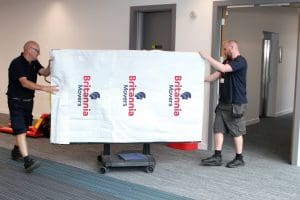
Our crews move families every day and are happy to be asked questions. A quick walk round before loading starts means everyone knows what is going, what is staying and what needs particular care.
Then it is mostly about keeping pathways clear and everyone out of the way of heavy items. For the journey itself, take water, snacks and something to keep children occupied, plan a break on a longer trip, and keep pets secured and comfortable in the car.
7. Why families choose Britannia Cestrian
We have been moving families in and out of Chester since 1972 and we are still family-run, which is part of why moves with children in them are familiar territory rather than a complication.
- Crews who are used to working around children and pets
- Full or part packing to take the workload off you
- Careful handling of fragile and valuable belongings
- Scheduling that works around school runs and childcare
- Household storage at our own Chester facility if your dates do not line up
- Part of the Britannia Movers International network
We also cover a wide area beyond the city. Have a look at the areas we cover if you are moving somewhere nearby rather than within Chester itself.
8. The short version
Before: involve the children early, get pets used to carriers, declutter and start packing, notify schools, book your survey.
During: hold routines steady, keep essentials boxes with you, keep children and pets away from the loading, talk to your crew.
After: unpack the children’s rooms first, get pet routines going again straight away, get out and see the area, and give everyone a few days.
Arrange your survey
Get in touch or call 01244 521 950 to book a free home survey, and we will plan the move around your family rather than the other way round.
Frequently asked questions
What is the best age to move with children?
There is no ideal age. Clear explanations and steady routines matter far more than how old they are.
Should children be there on moving day?
Younger children are usually better off with a relative or friend for the day. Older ones often like having a job to do, so give them one.
How do I keep pets calm during the move?
A safe room with the door shut and signed, familiar bedding, and normal feeding and walking times either side of the day.
Can you pack fragile items for us?
Yes. Our packing service covers delicate and high value belongings, and it can be booked as part of the move or on its own.
Do you offer storage if our dates do not match up?
Yes. We have secure storage at our own site near Chester for short or long term use, which is what most families use when a chain slips.